Why Commercial Roll-Up Doors Fail Prematurely (And How to Prevent It)
Commercial roll-up doors are built to work hard. In warehouses, loading areas, manufacturing facilities, and commercial buildings, a door may open and close dozens or even hundreds of times in a single day. With the right care, a quality commercial door can provide years of dependable service.
What we often see, however, is a door needing major repairs much sooner than anyone expected. Sometimes age is responsible, but premature failure is frequently connected to problems that could have been prevented.
Regular roll-up door maintenance can identify wear before it affects other components. It can also reduce downtime, improve workplace safety, and help businesses get more life from their equipment. Understanding what causes premature failure is a good place to start.
Small Maintenance Problems Can Create Expensive Repairs
Lubrication sounds simple, but it is one of the most important parts of commercial door maintenance. Rollers, hinges, bearings, chains, and other moving components create friction constantly. Proper lubrication reduces that friction and allows everything to move as designed.
When lubrication is neglected, squeaking, grinding, or other unusual noises may start to appear. The door might also become slower or less smooth. Continuing to operate it that way can accelerate wear and put additional strain on the operator and other components.
The solution is not simply spraying lubricant everywhere. Different components require appropriate products, and some parts should not be lubricated at all. That is one reason we include lubrication as part of a professional commercial overhead door service rather than treating it as the only maintenance a door needs.
Worn rollers and hinges are another issue we regularly encounter. A roller that no longer travels smoothly can create resistance and affect the alignment of the door. Damaged hinges can allow sections to move in ways they were not designed to move.
Individually, these may seem like relatively small problems. Together, they can put additional stress on tracks, panels, operators, and hardware. Replacing an inexpensive worn component early is generally far better than waiting until it contributes to a larger industrial door repair.
Forklift Damage and Poor Door Balance Should Not Be Ignored
In a busy warehouse, sometimes the biggest threat to an overhead door is not normal wear. It is the forklift coming through the opening.
Forklift and equipment impacts are surprisingly common. A driver may clip the bottom of a door, strike a track, or make contact with a panel while manoeuvring through a busy loading area. Even a relatively minor impact can knock components out of alignment.
The door may continue operating afterward, which can give the impression that no real damage was done. That is where problems can begin.
A bent track or damaged roller can gradually place additional stress on the entire system. Eventually, what started as a small collision can result in a door becoming stuck, coming off its track, or requiring significant commercial roll-up door repair.
We recommend having a commercial door inspected after any noticeable impact rather than waiting to see what happens. Catching damage early can make the repair considerably simpler and less costly.
Proper balance is just as important.
The springs and counterbalance system help manage the weight of the door. When a door is correctly balanced, the operator does not have to lift the full weight every time it opens. If that balance changes because springs have weakened or components have shifted out of adjustment, the operator has to work considerably harder.
A door dropping too quickly, struggling to open, sitting unevenly, or making new noises are all signs worth investigating promptly.
Because commercial door springs operate under significant tension, balancing and spring adjustments should always be left to trained technicians. Attempting these adjustments without the proper equipment and knowledge can be dangerous.
Preventative Maintenance Keeps Commercial Doors Working Longer
The most effective way to deal with premature door failure is to prevent it in the first place.
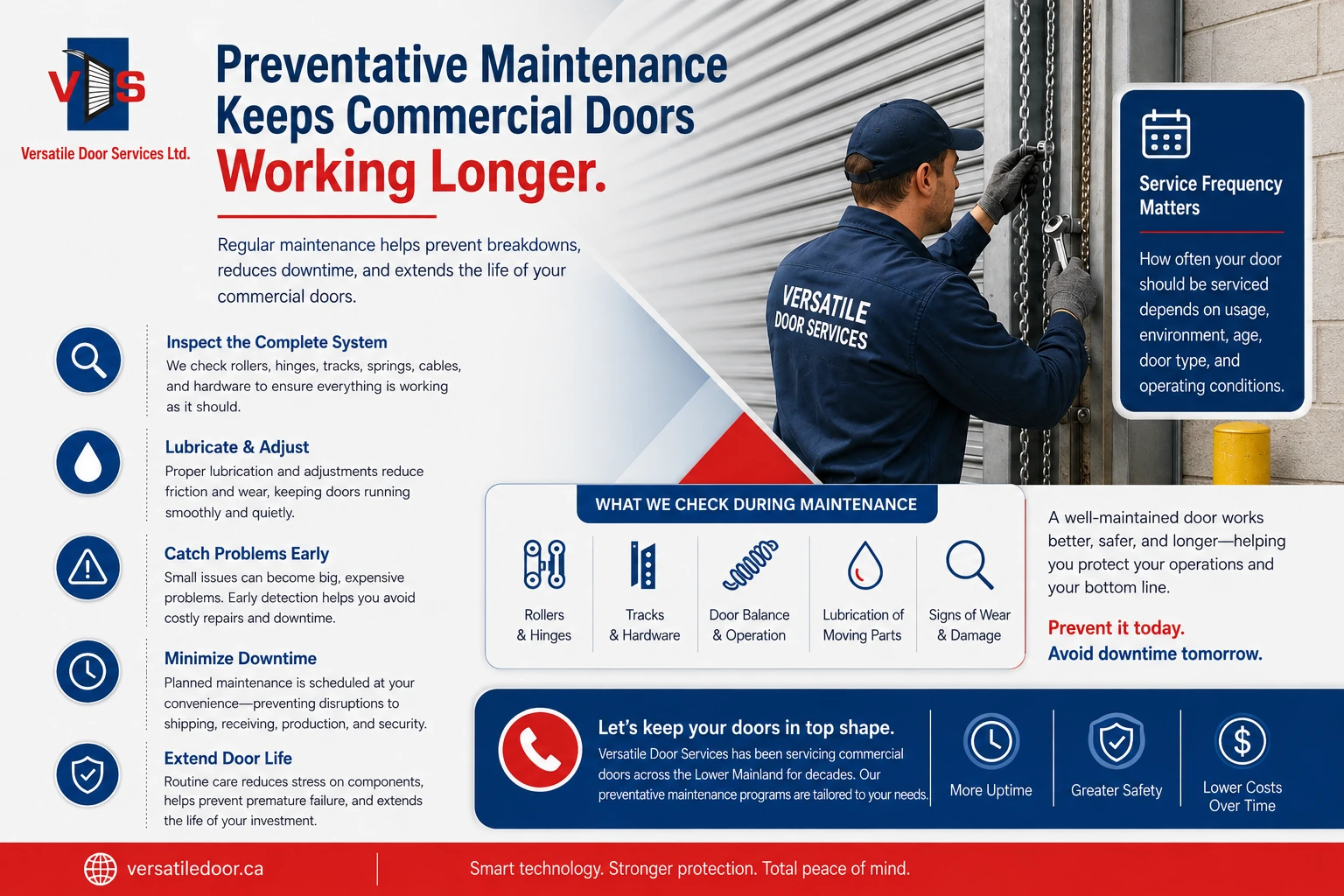
A regular roll-up door maintenance program provides an opportunity to inspect the complete system rather than waiting for one component to break. Rollers and hinges can be checked, tracks and hardware examined, door balance tested, appropriate components lubricated, and early signs of damage identified before they escalate.
For businesses, preventative service also makes maintenance more predictable. An unexpected door failure can interrupt shipping, receiving, production, or customer access. A loading door stuck open may also create security and weather concerns that compound the disruption.
Planned maintenance allows many repairs to happen at a convenient time rather than becoming an emergency in the middle of a busy workday.
How frequently a commercial door should be serviced depends heavily on how it is used. A warehouse door cycling throughout the day will experience very different wear from a door that opens only a handful of times. The age, environment, door type, and operating conditions all factor into the right schedule.
After decades of servicing doors throughout the Lower Mainland, one lesson remains consistent: paying attention to the small things prevents bigger problems later.
At Versatile Door, we understand how important reliable commercial doors are to your daily operations. If your commercial doors are becoming noisy, operating unevenly, or have not been inspected recently, our commercial overhead door service and preventative maintenance can help identify developing problems early. Contact Versatile Door today to schedule your commercial door inspection or maintenance service.
Frequently Asked Questions
1. How often should commercial roll-up doors be serviced?
There is no single schedule that fits every business. High-cycle warehouse and industrial doors may need more frequent inspections than lightly used doors. We can recommend a maintenance schedule based on your equipment and daily usage.
2. What are the first signs that a commercial roll-up door needs repair?
New noises, slower operation, jerking, uneven movement, damaged panels, and difficulty opening or closing can all indicate a developing problem. Having these symptoms inspected early can prevent additional damage.
3. Should a commercial door be inspected after a forklift impact?
Yes. Even if the door continues working, an impact may bend a track, damage a roller, or affect alignment. An inspection can identify damage before continued operation makes the problem worse.
4. Can lack of lubrication damage an overhead door?
It can. Insufficient lubrication increases friction and wear on certain moving components. Using the correct lubricant in the correct locations is important, however, as applying oil indiscriminately throughout the system is not proper maintenance.
5. Why does an improperly balanced commercial door cause problems?
A poorly balanced door can place excessive strain on the operator, springs, cables, and other components. It can also affect how safely and smoothly the door moves during operation.
6. Is preventative maintenance cheaper than emergency industrial door repair?
In many situations, yes. Preventative maintenance allows worn parts and minor problems to be addressed before they contribute to a larger failure. It can also reduce costly downtime and the need for emergency service calls.